

 Travelog - Cyprus
 Travelog New Zealand
 Writers / Traveloggers
 Explore URPs worldwide
Tourists provide the entertainment for charming Kaikoura locals
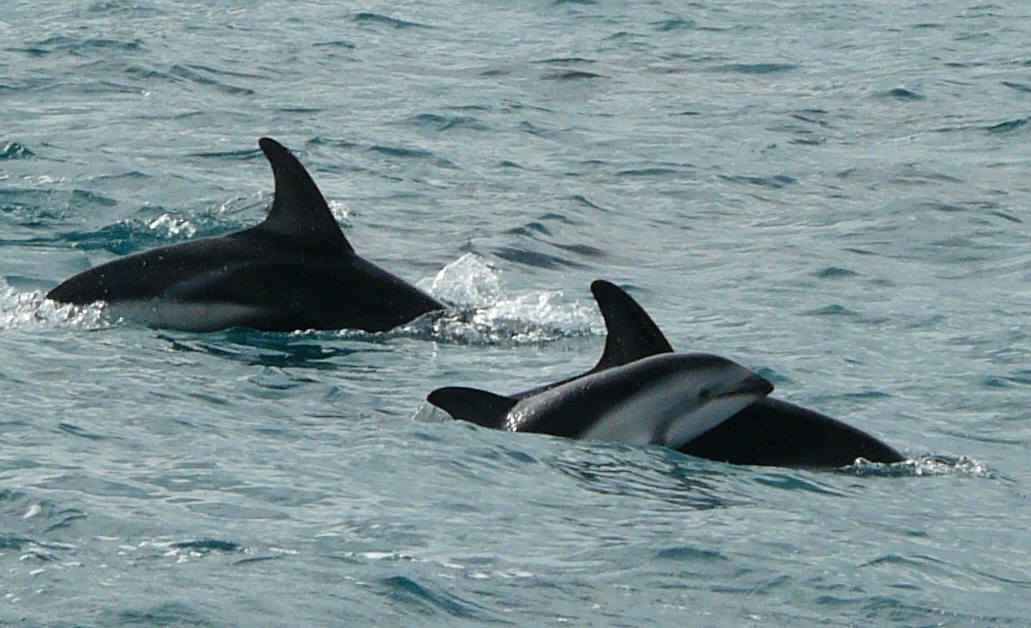
“WELCOME to my office,” says Dave with a wide grin as his arms sweep across the sea, sky and towering seaward Kaikoura ranges.
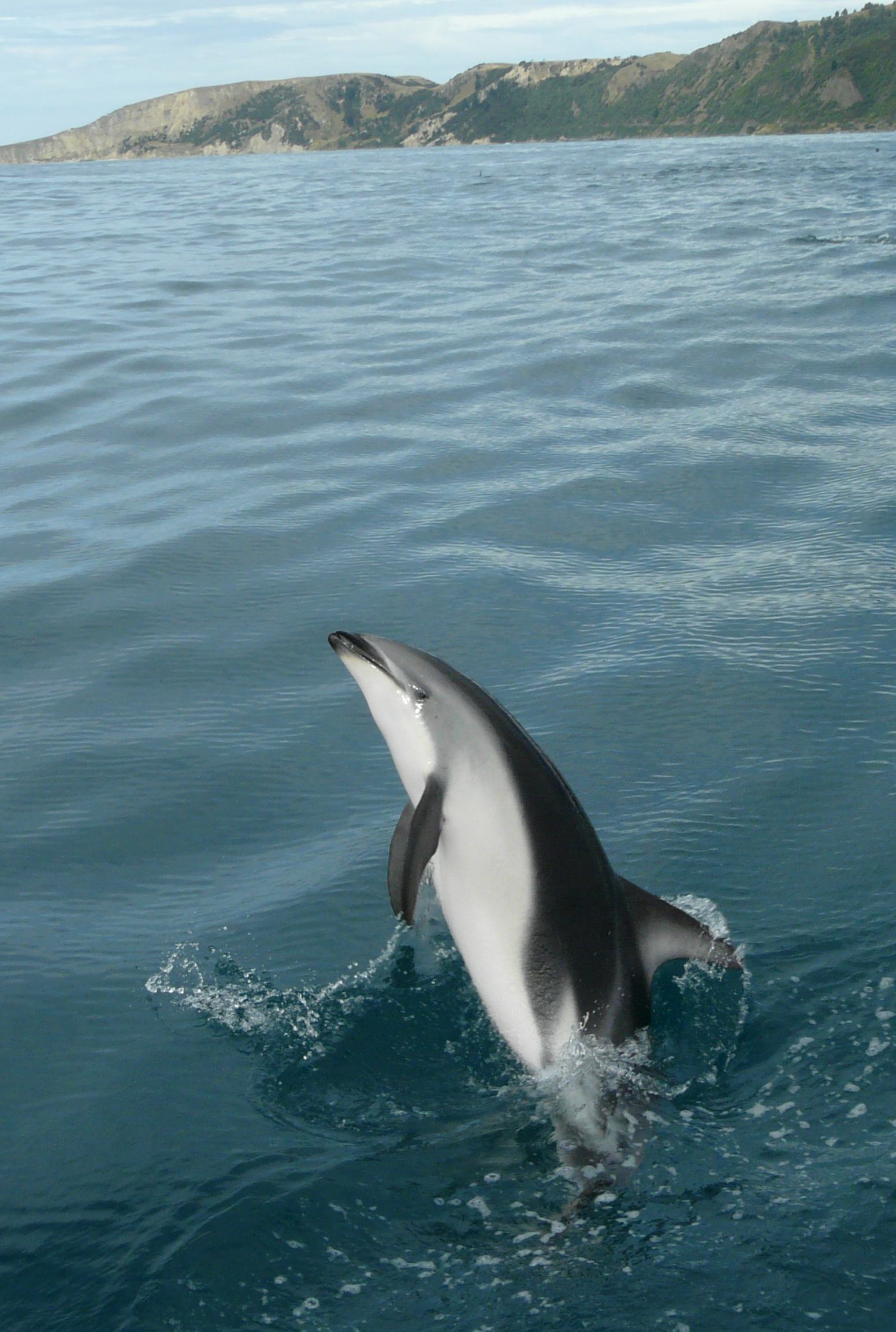
As if on cue, a Dusky dolphin leaps from the water beside the boat and proceeds to dance across the water slapping his fins.
“He’s obviously the show off in the group,” says Dave.
The former marine biologist turned Dolphin Encounter guide patiently answers the most common question he gets from scores of tourists: “So why do dolphins jump?”
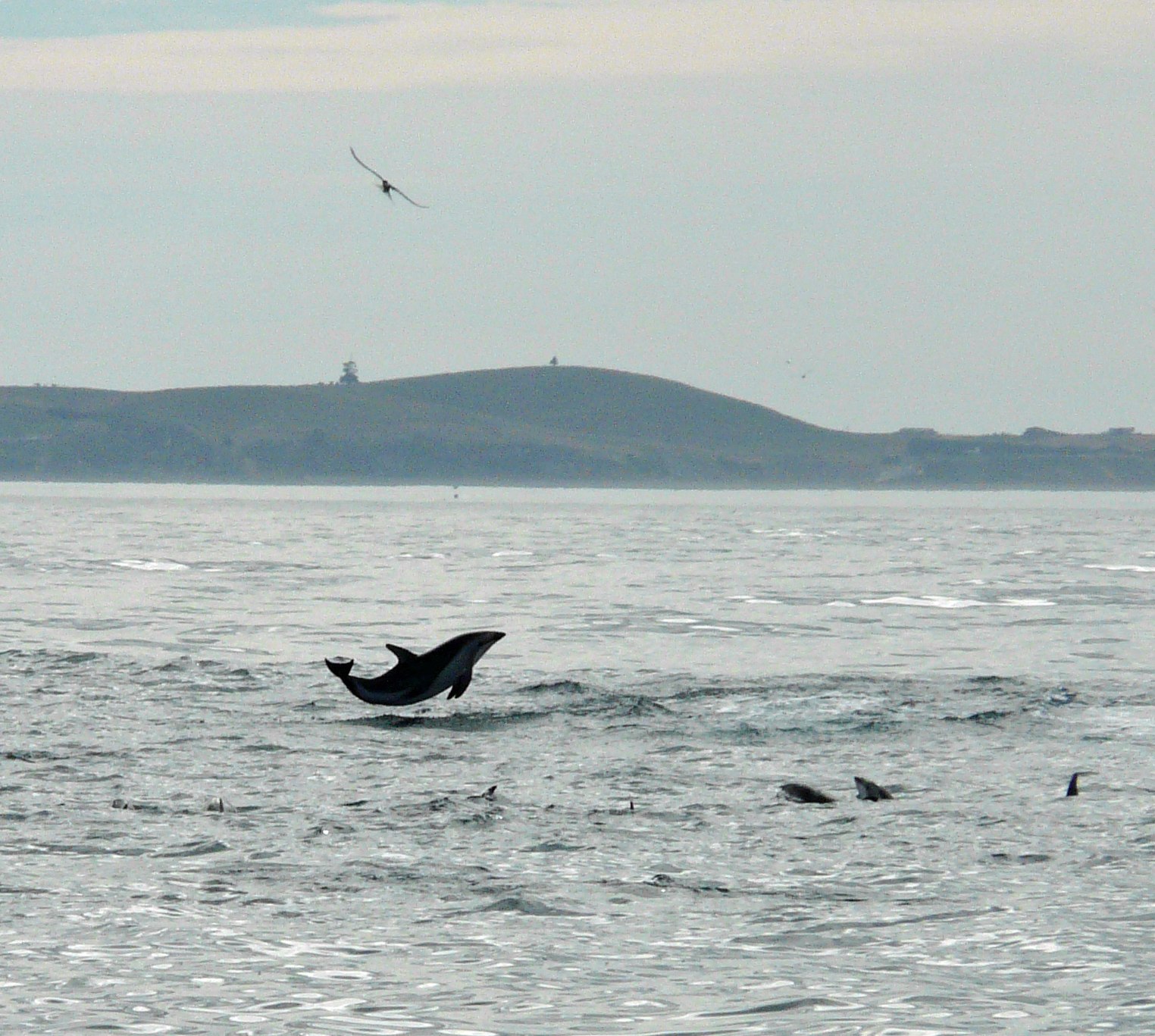
“Well, we actually don’t know for sure,” he says. So not all that helpful, but to be honest nobody really cares because after a 30-minute boat trip south from Kaikoura we’ve arrived at a site near Goose Bay to be greeted by a pod of nearly 200 dolphins.
The desire to jump in the water and swim with the animals is palpable, almost frantic.
“Wait for the horn to sound,” warns Dave’s colleague, Ed. He’s already given us the safety briefing and the horn means the engines are off and it’s safe to get off the boat and into the water.
Jump in before – and meet the prop – and you’re likely to become chum … and the experience will probably move from dolphin to shark encounter.
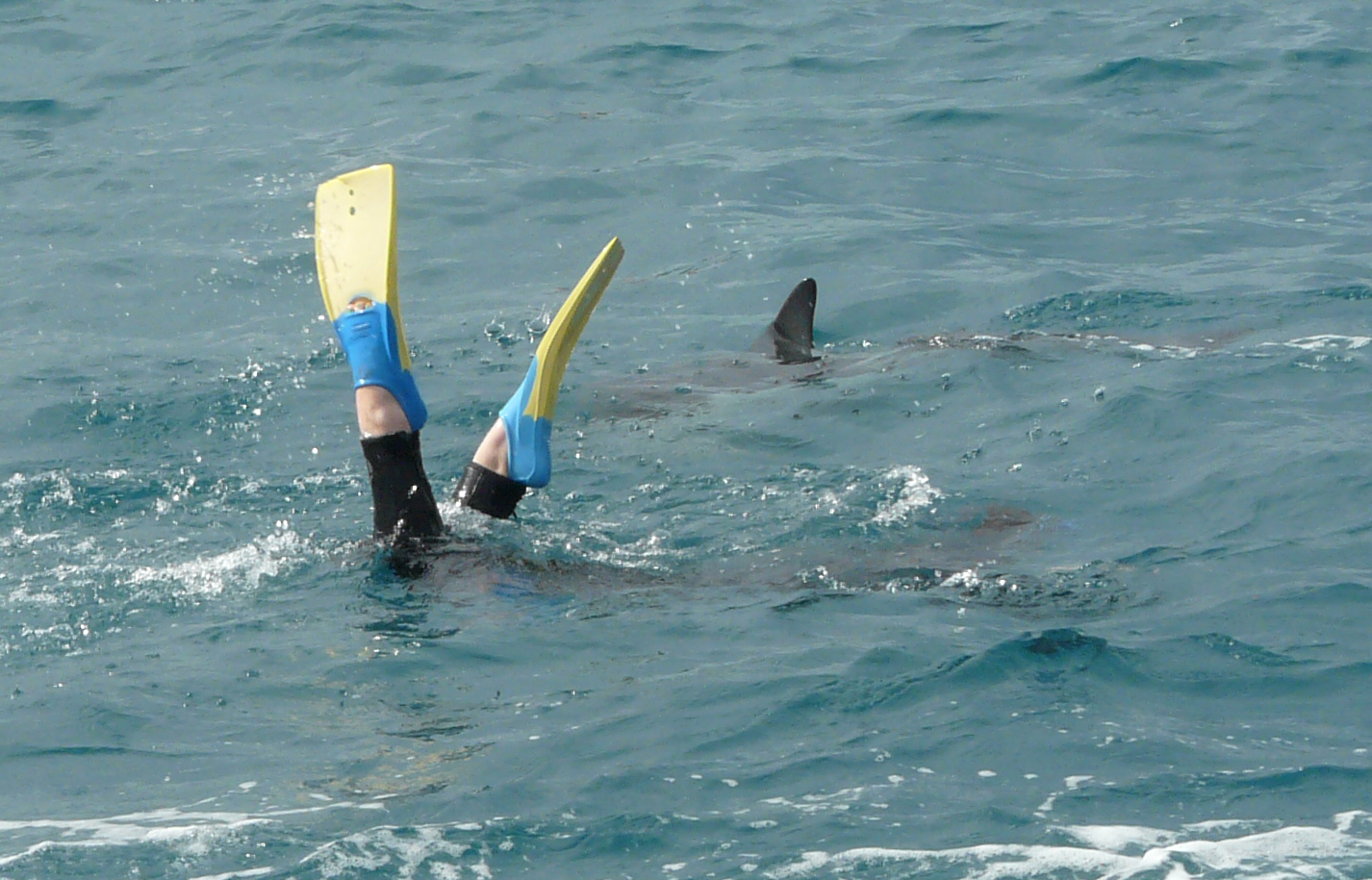
We’re a mixed bag that’s signed up for this morning’s swim-with-the-dolphins experience. We join a big group of French, German and English tourists eager to don wetsuits, masks and fins to brave the 16oC water and get up close and personal with some of Kaikoura’s more enduring residents.
Dolphin Encounters runs three tours a day in summer starting at 5:30am and twice a day in winter between May and once a day at 12:30pm in midwinter. They take out three boats with 16 swimmers a piece and a handful of spectators. That’s over 1,000 swimmers a week.
I look closely to see if Ed’s smile is fixed in place and listen for Dave to sound bored – but it isn’t and he doesn’t. In fact, both guides cheerfully exhort the swimmers to make more noise, swim around in circles and dive down below the water.
“You’re here to entertain the dolphins, not the other way round,” yells Dave.
The crew never knows from one day to the next what to expect from the dolphins apart from the fact they’ll always be there. Sometimes they’re friendlier than others. This morning we’re lucky and the dolphins are curious. They swim through, then circle the group of swimmers, coming back again and again for another look.
The best idea is to swim with your arms at your side and let them come to you, we are told. The dolphins are curious and the guides encourage swimmers in the water to make some noises, for example, singing a favourite song or making a dolphin-like noise through your snorkel can attract the dolphins close to you.
Bobbing up and down slowly on the surface of the sea triggers a wave of seasickness for one poor member of the group and she heads back to the boat for a bit. But when Ed spots a group of dolphins headed our way he encourages her back into the water and a dolphin swims up to her.
For a couple of minutes they swim around and over and under each other.
“He was looking at me. I could see an eye checking me out,” she laughs later on the boat as we chug our way back to the wharf. Cold and queasy both forgotten in the magic of the moment, enhanced even more with the appearance later, back on the boat, of hot chocolate and ginger nuts.
Then it’s back to base because like in any good office, under Department of Conservation law, dolphins have to have a lunch break.
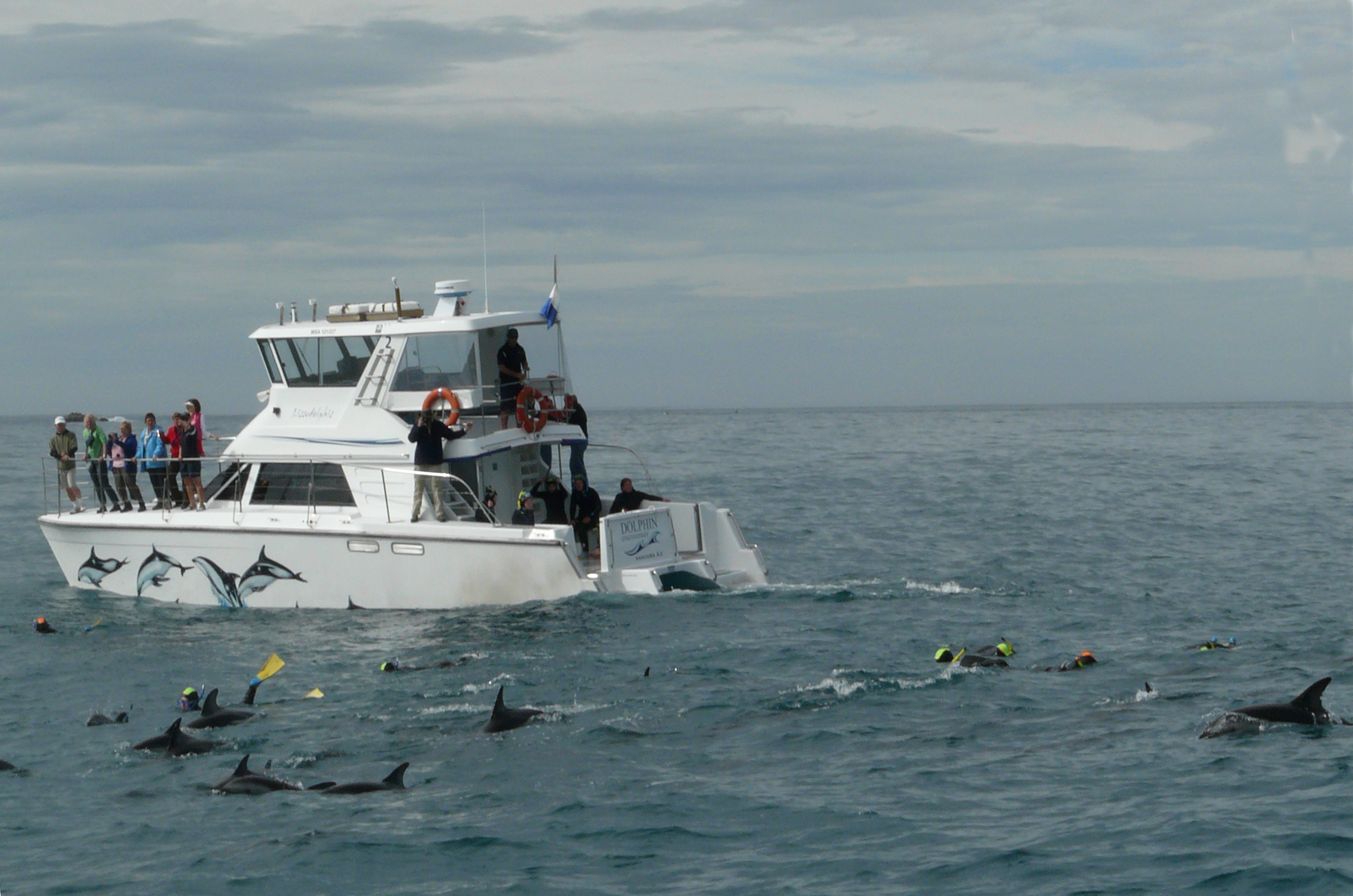
* A two-hour Dolphin Encounter experience costs $245 (adult) and $135 if you are just watching. Prices include the use of mask, snorkel, fins and wetsuit. Visit dolphinencounter.co.nz for more information.
ABOUT THE AUTHOR – Kim Triegaardt
Kim Triegaardt is a journalist, corporate communications specialist and – as regularly as she can manage – travel writer. Kim’s professional career has taken her around the globe, but she calls the New Zealand city of Christchurch, in the South Island’s Canterbury Region, home. Kim is the founder of the corporate communications company Totally Write, which she continues to operate.
♦ ENDS
- Hits: 517